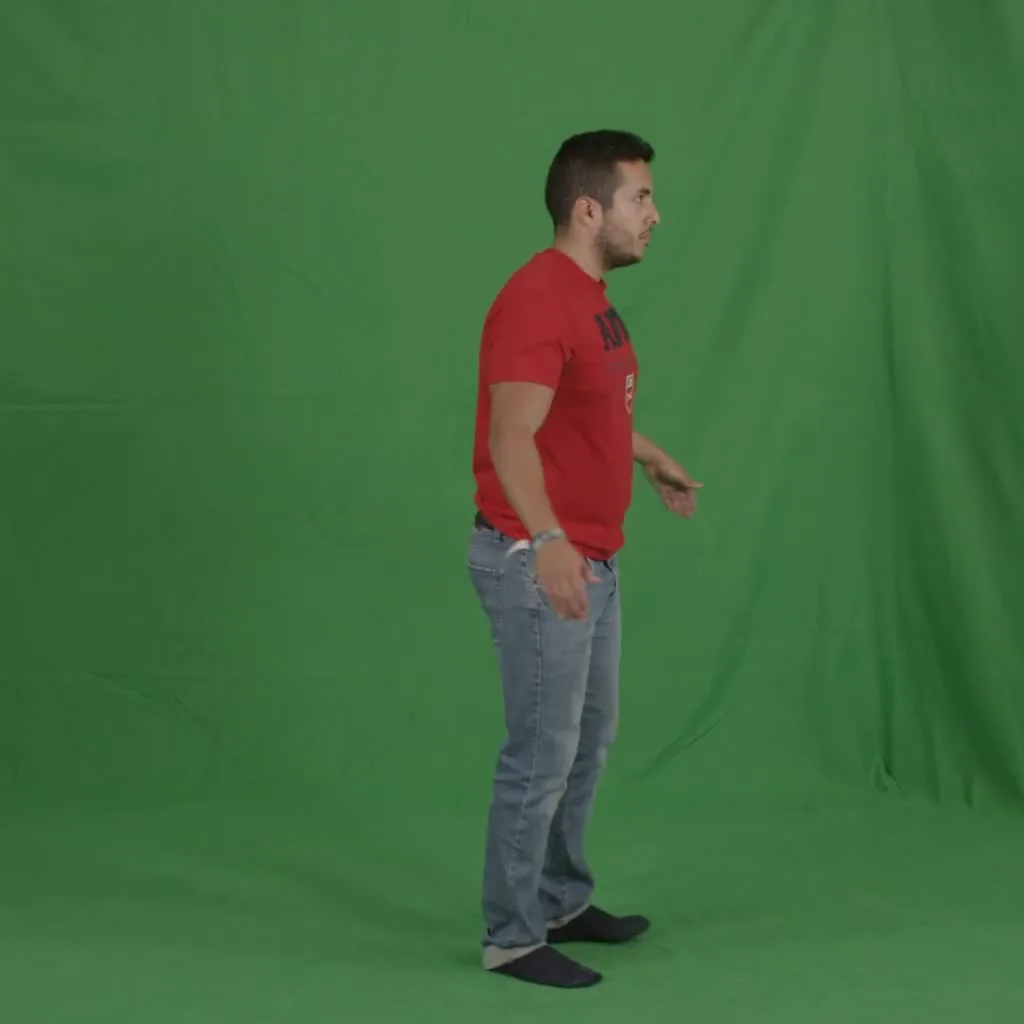
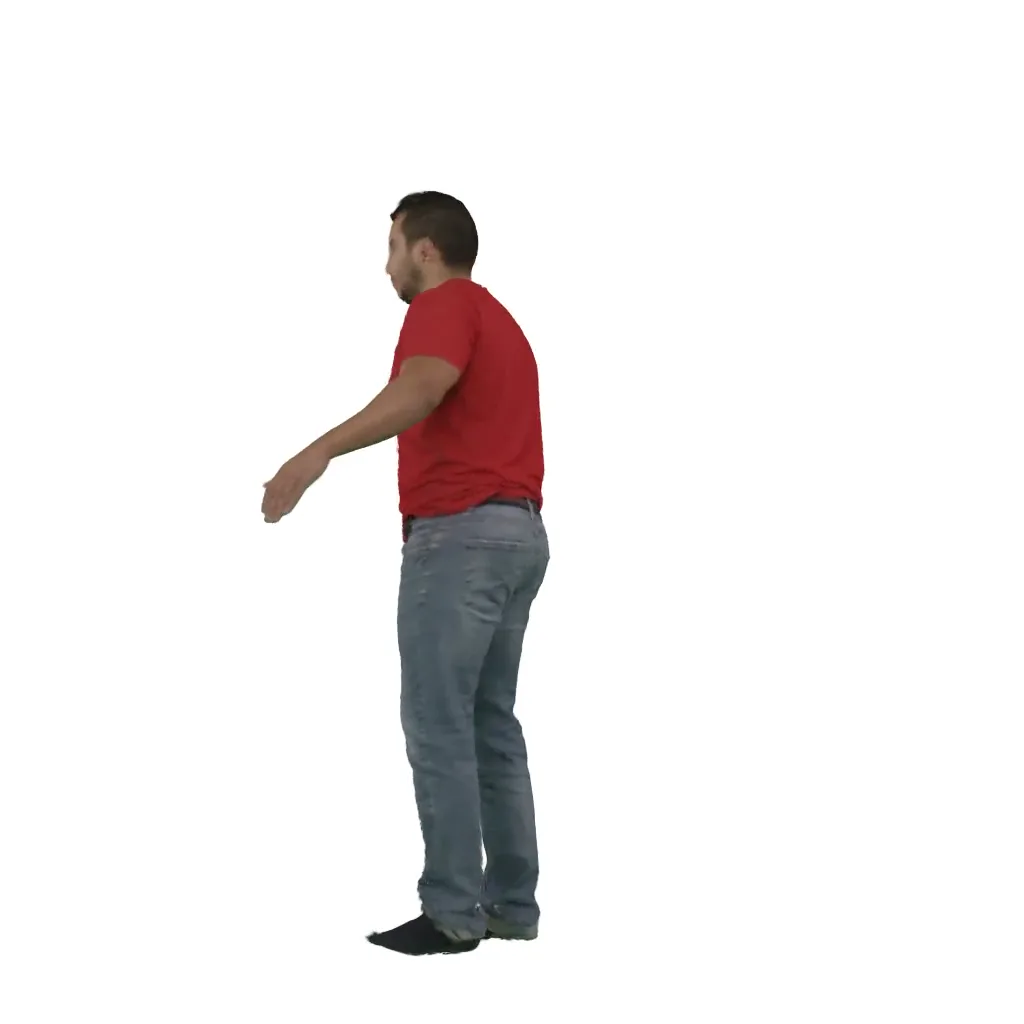
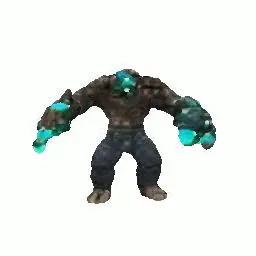
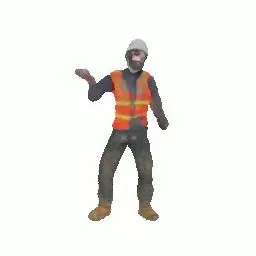
Motion initialization
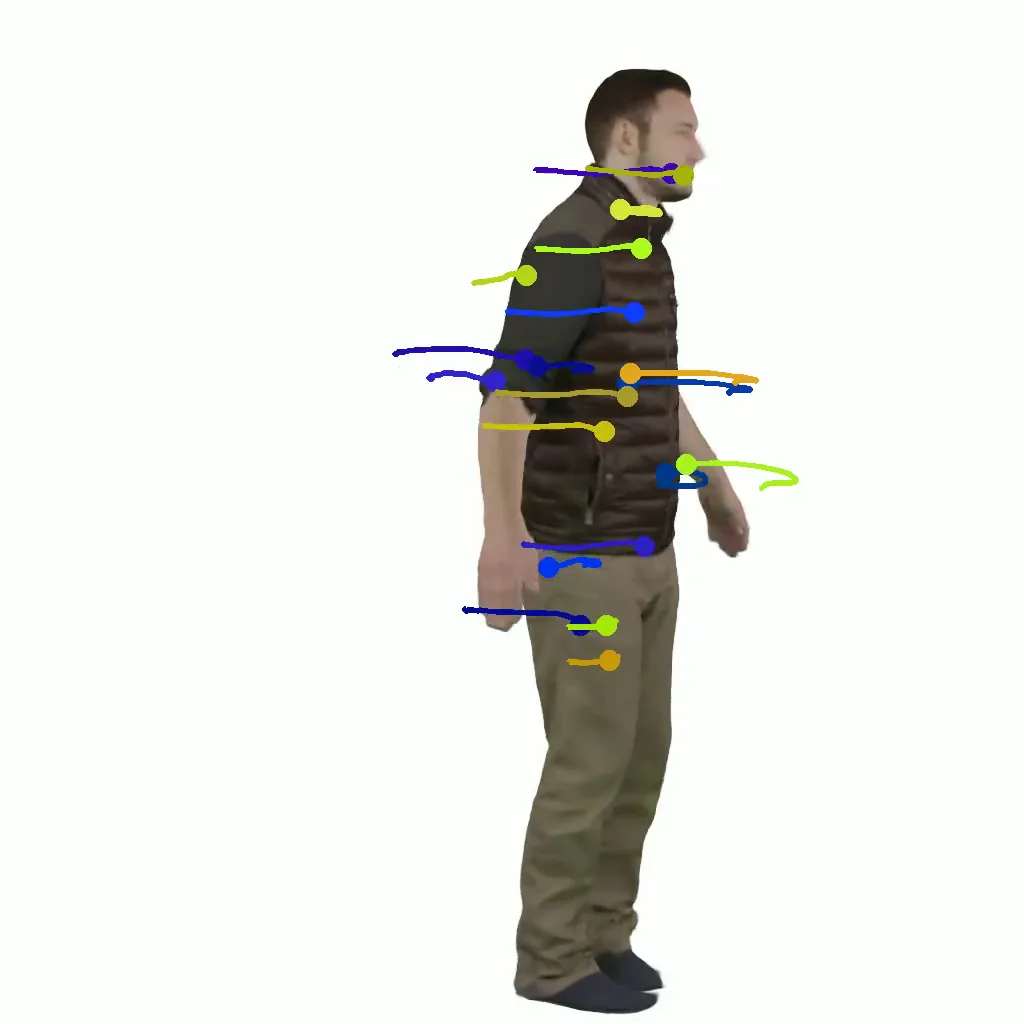
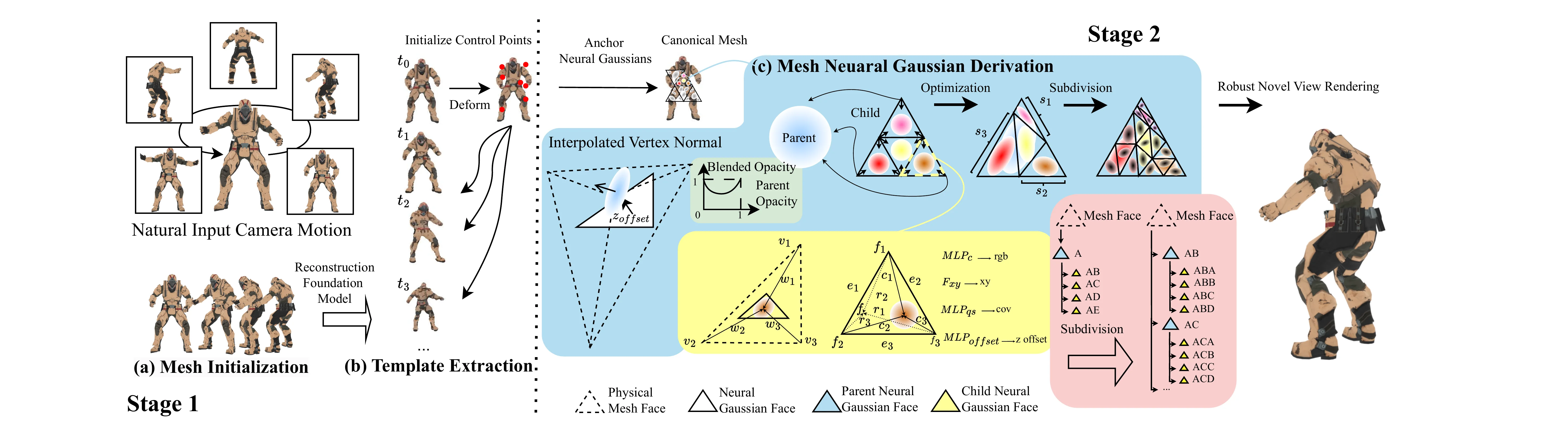
Reconstruction-model priors initialize per-frame meshes and Gaussian deformations from a monocular sequence.
Neural Mesh Gaussians for Robust Monocular Reconstruction of Dynamic Objects
Dynamic object reconstruction
from monocular video.
Improvements reported over prior state of the art in the paper’s evaluation.
Lower LPIPSAppearance reconstruction
Lower Chamfer distanceMesh reconstruction
Moving or staticGeneral dynamic objects
01 / Overview
A structured representation for monocular dynamic reconstruction.
Tessellation GS anchors neural 2D Gaussians to mesh faces to model appearance and geometry. It reconstructs dynamic objects and synthesizes novel views from a single moving or static camera.
3D Gaussian Splatting (GS) enables highly photorealistic scene reconstruction from posed image sequences but struggles with viewpoint extrapolation due to its anisotropic nature, leading to overfitting and poor generalization, particularly in sparse-view and dynamic scene reconstruction. We propose Tessellation GS, a structured 2D GS approach anchored on mesh faces, to reconstruct dynamic scenes from a single continuously moving or static camera. Our method constrains 2D Gaussians to localized regions and infers their attributes via hierarchical neural features on mesh faces. Gaussian subdivision is guided by an adaptive face subdivision strategy driven by a detail-aware loss function. Additionally, we leverage priors from a reconstruction foundation model to initialize Gaussian deformations, enabling robust reconstruction of general dynamic objects from a single static camera, previously extremely challenging for optimization-based methods. Our method outperforms the previous state of the art, reducing LPIPS by 29.1% and Chamfer distance by 49.2% on appearance and mesh reconstruction tasks.
02 / Video results
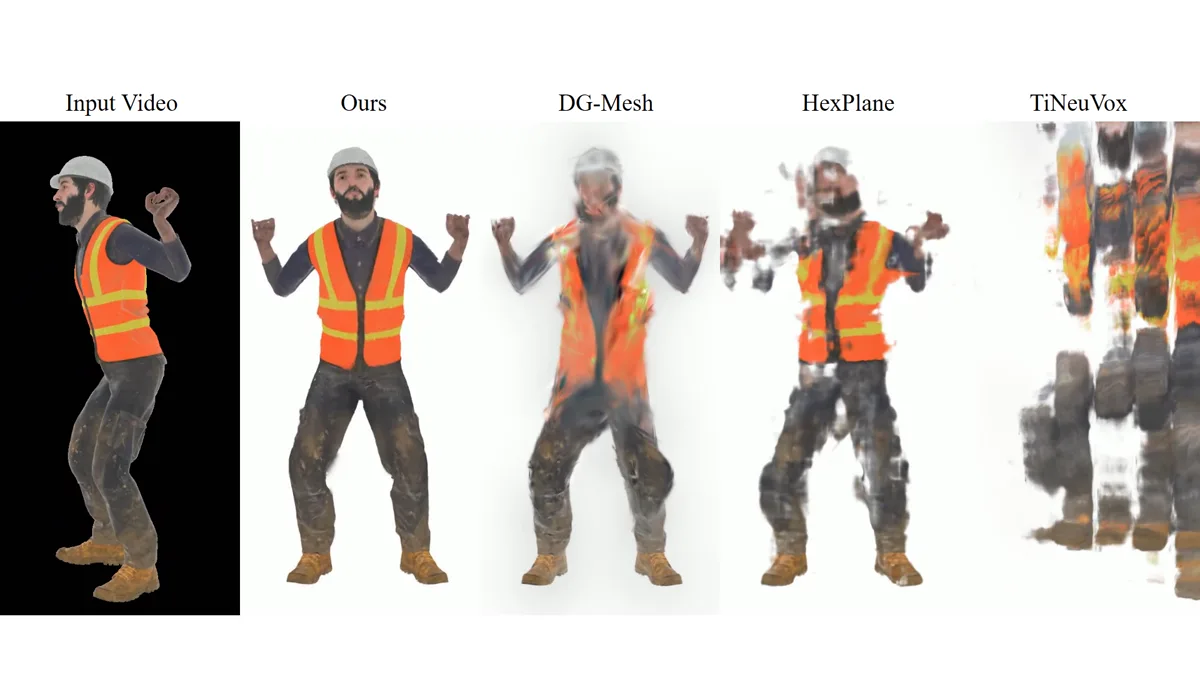
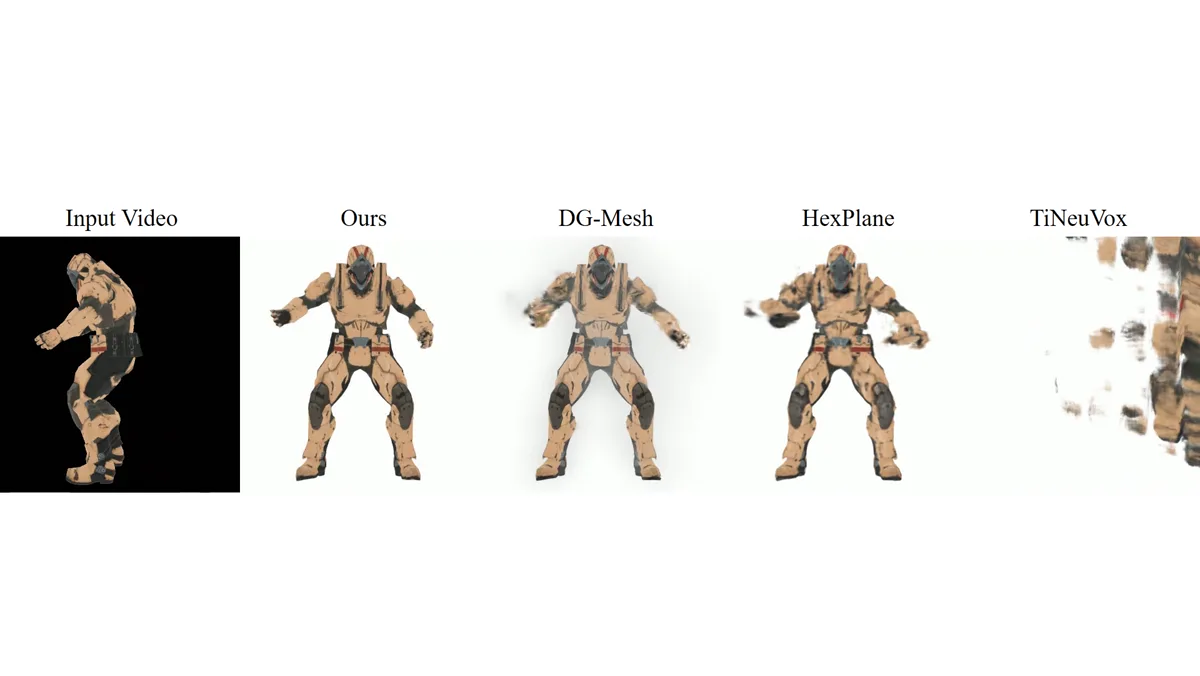
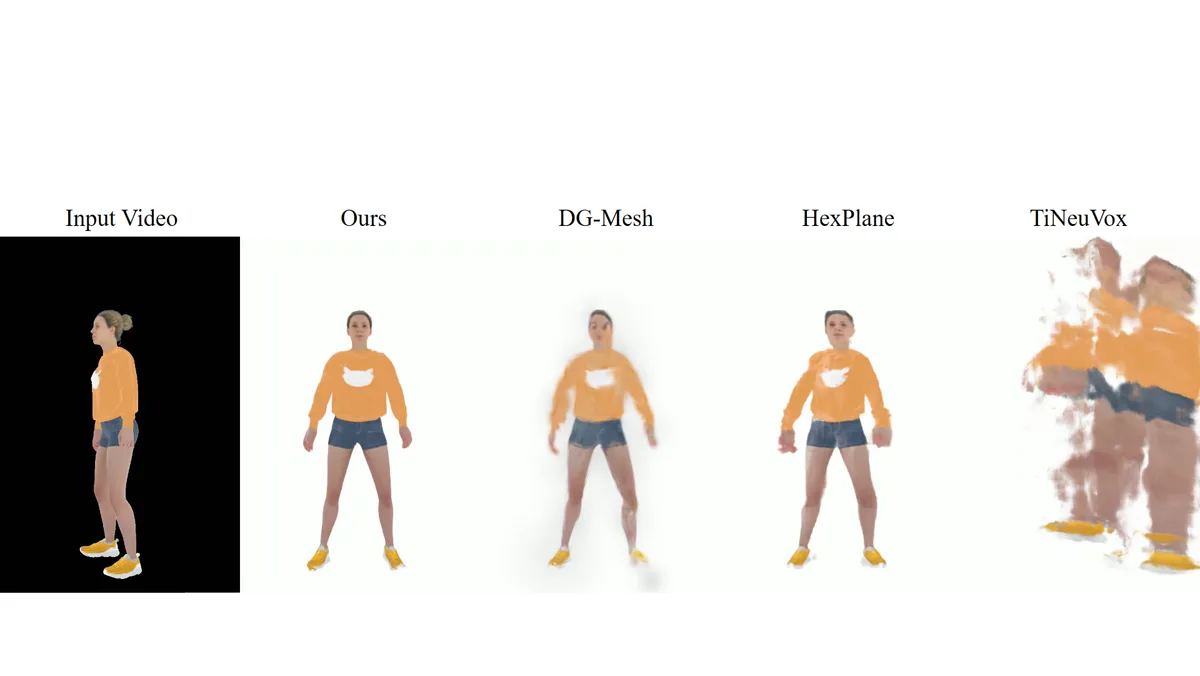
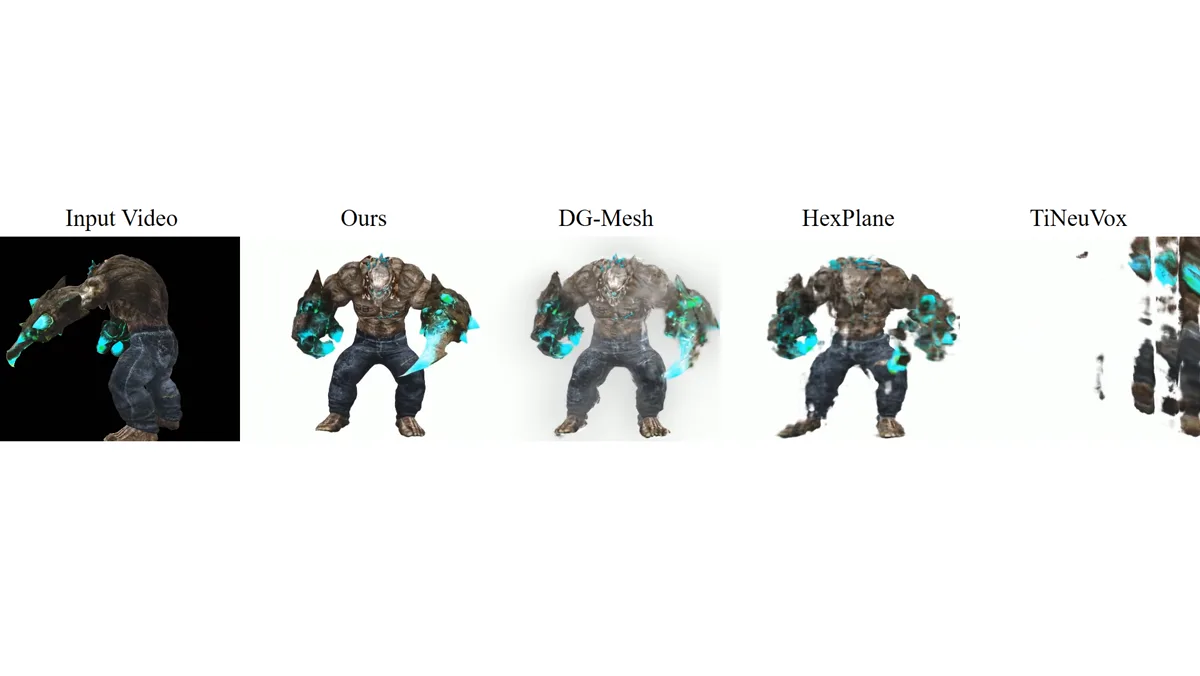
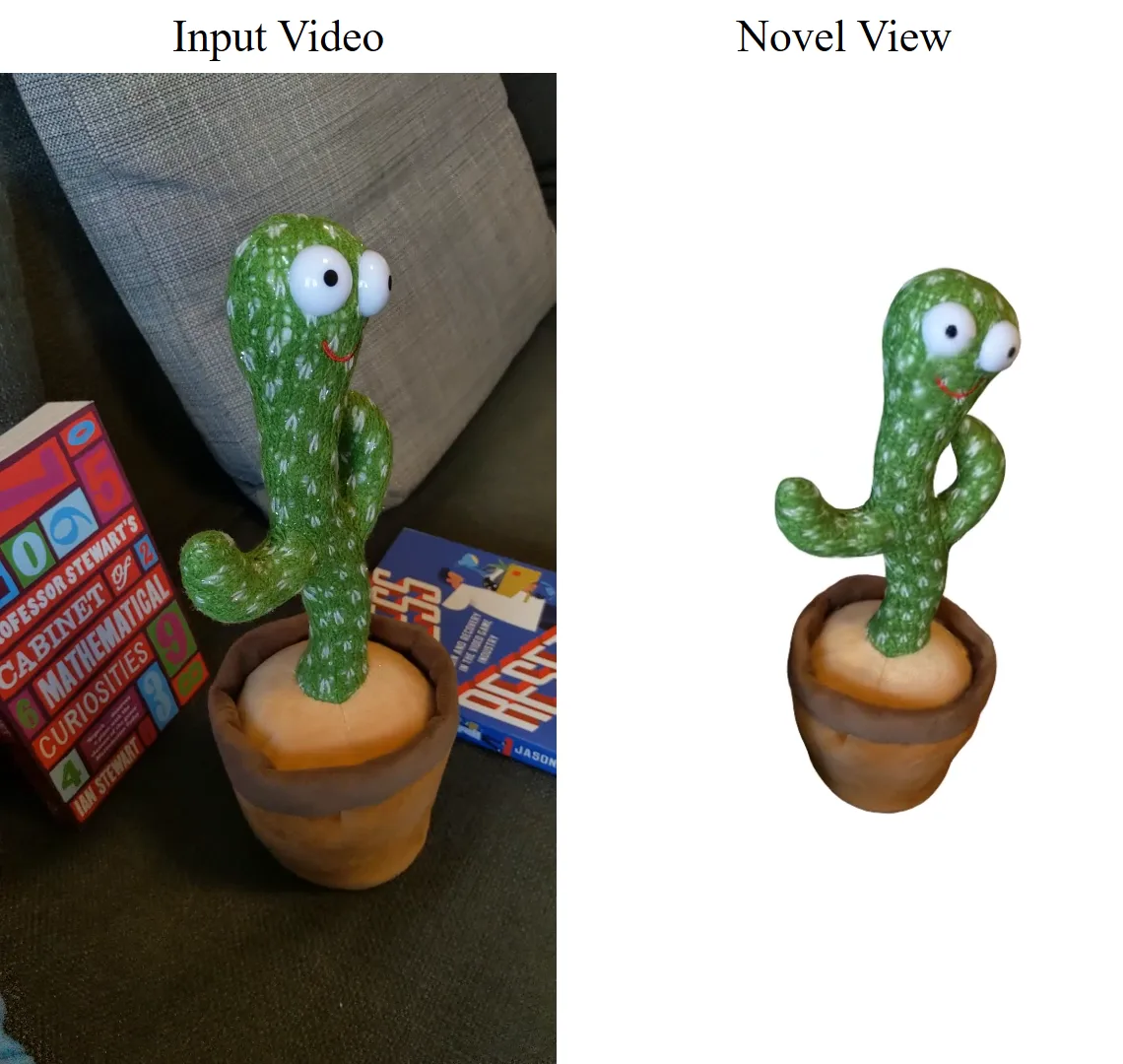
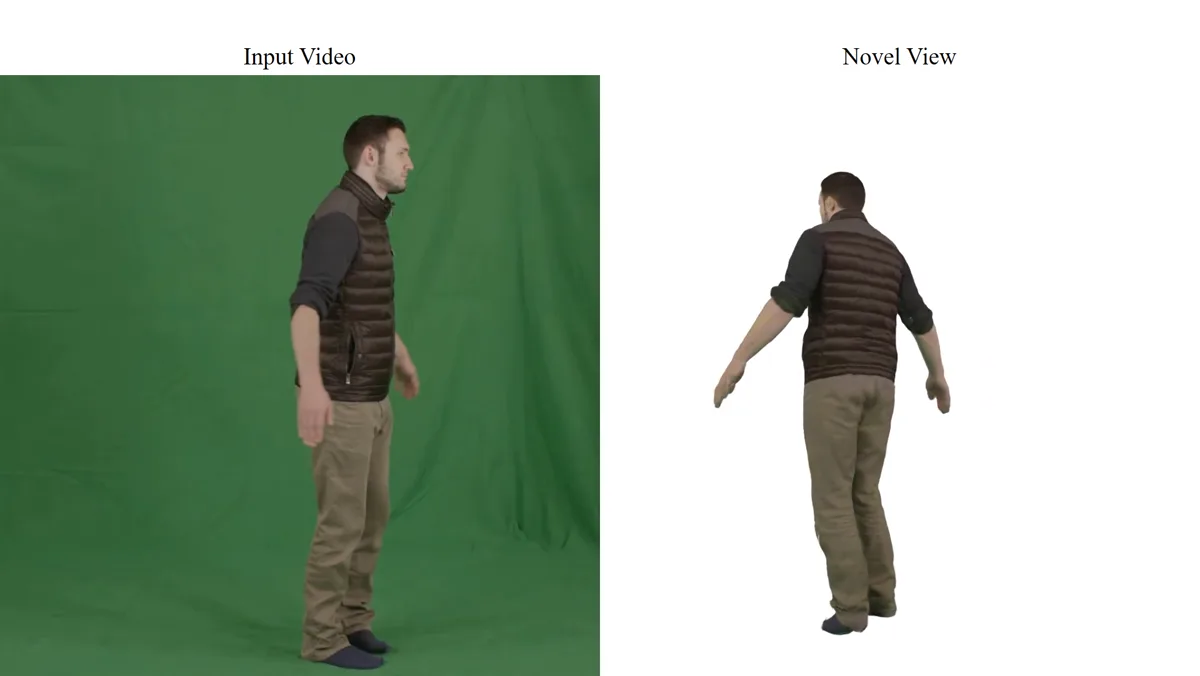
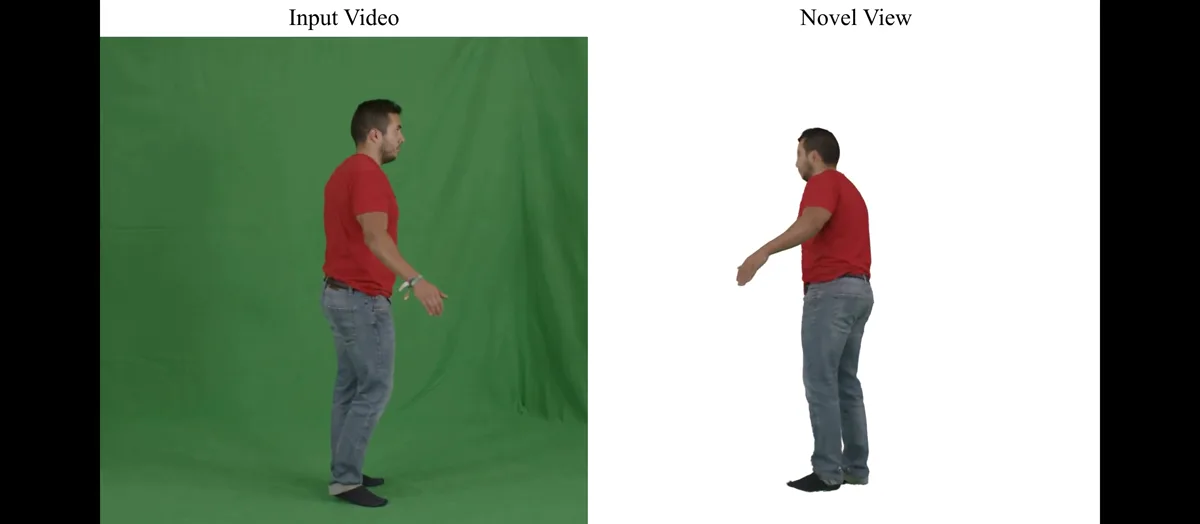
14 video results on synthetic sequences,
real-world captures, and LRM initialization.
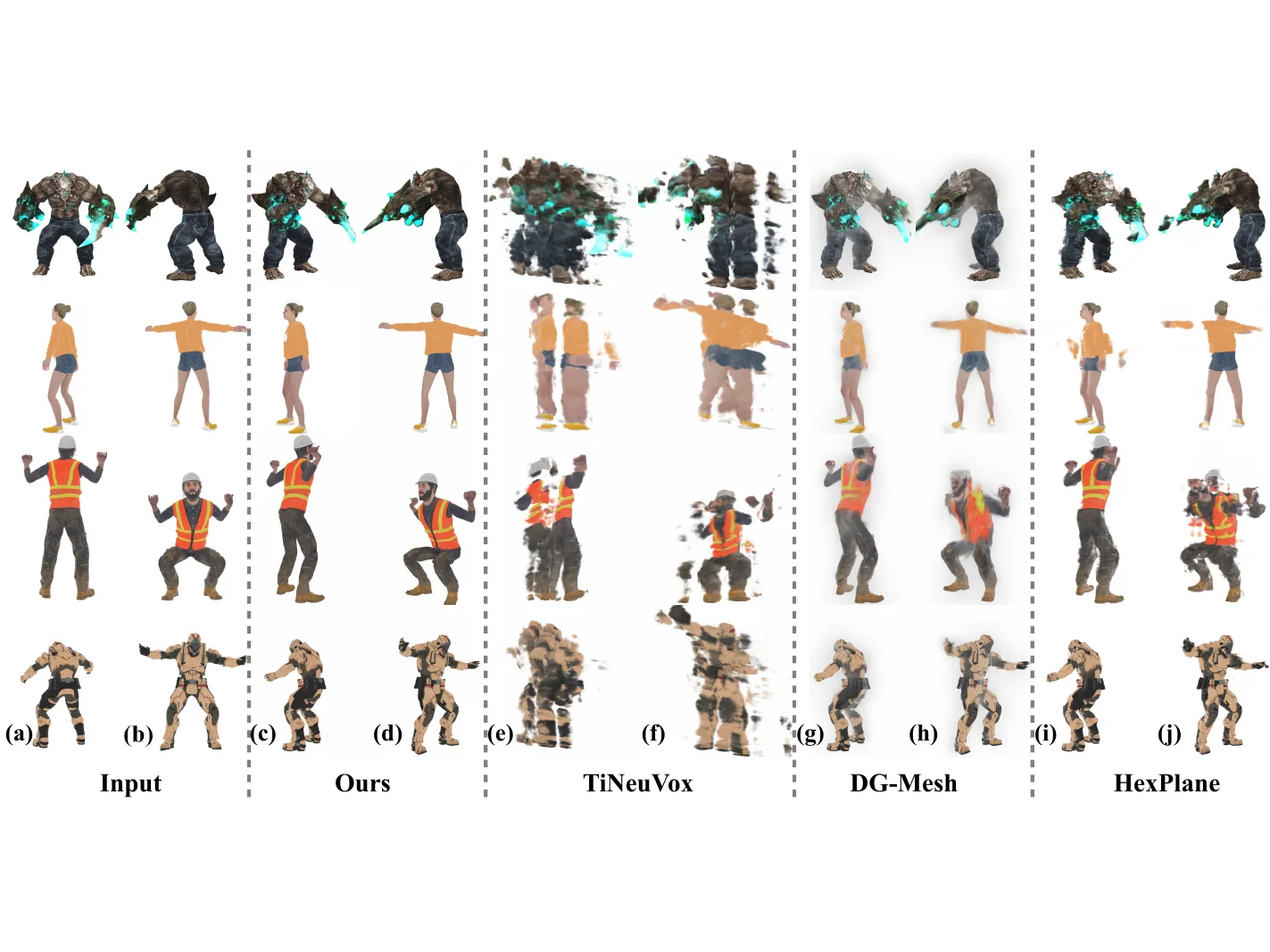
Novel-view comparison: input, TGS, DG-Mesh, HexPlane, and TiNeuVox.
Tessellation GS / 202603 / Method
A structured representation that connects
photometric appearance with geometry.
Reconstruction-model priors initialize per-frame meshes and Gaussian deformations from a monocular sequence.
A canonical template anchors neural 2D Gaussians to mesh faces, with attributes inferred from hierarchical neural features.
A detail-aware loss drives adaptive face subdivision, refining local geometry and appearance for novel-view rendering.
04 / Comparisons
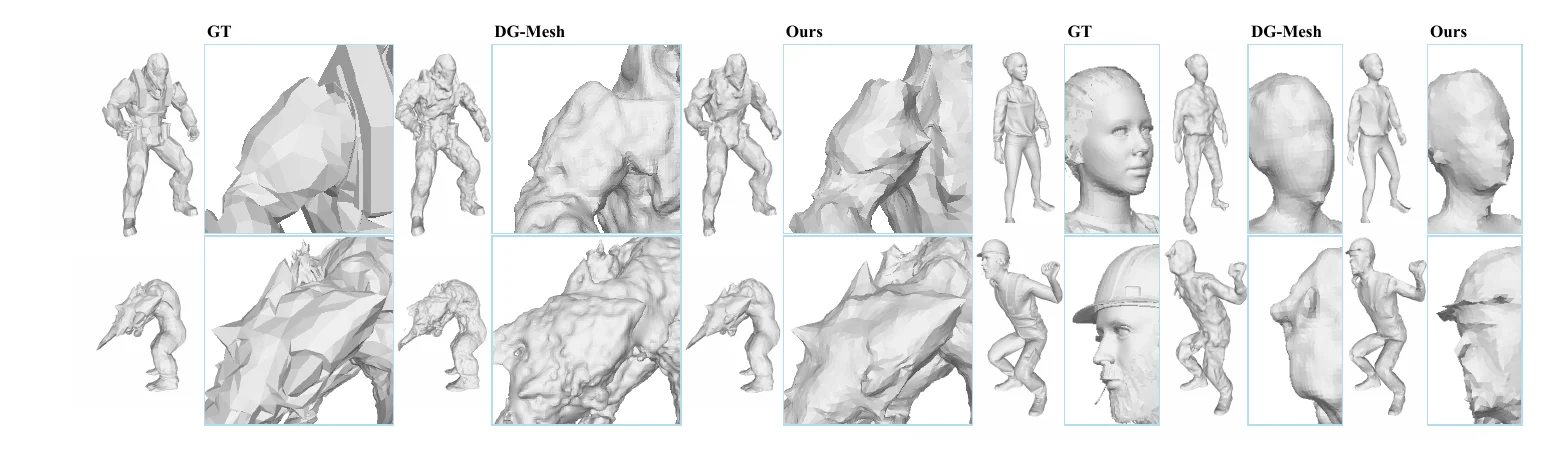
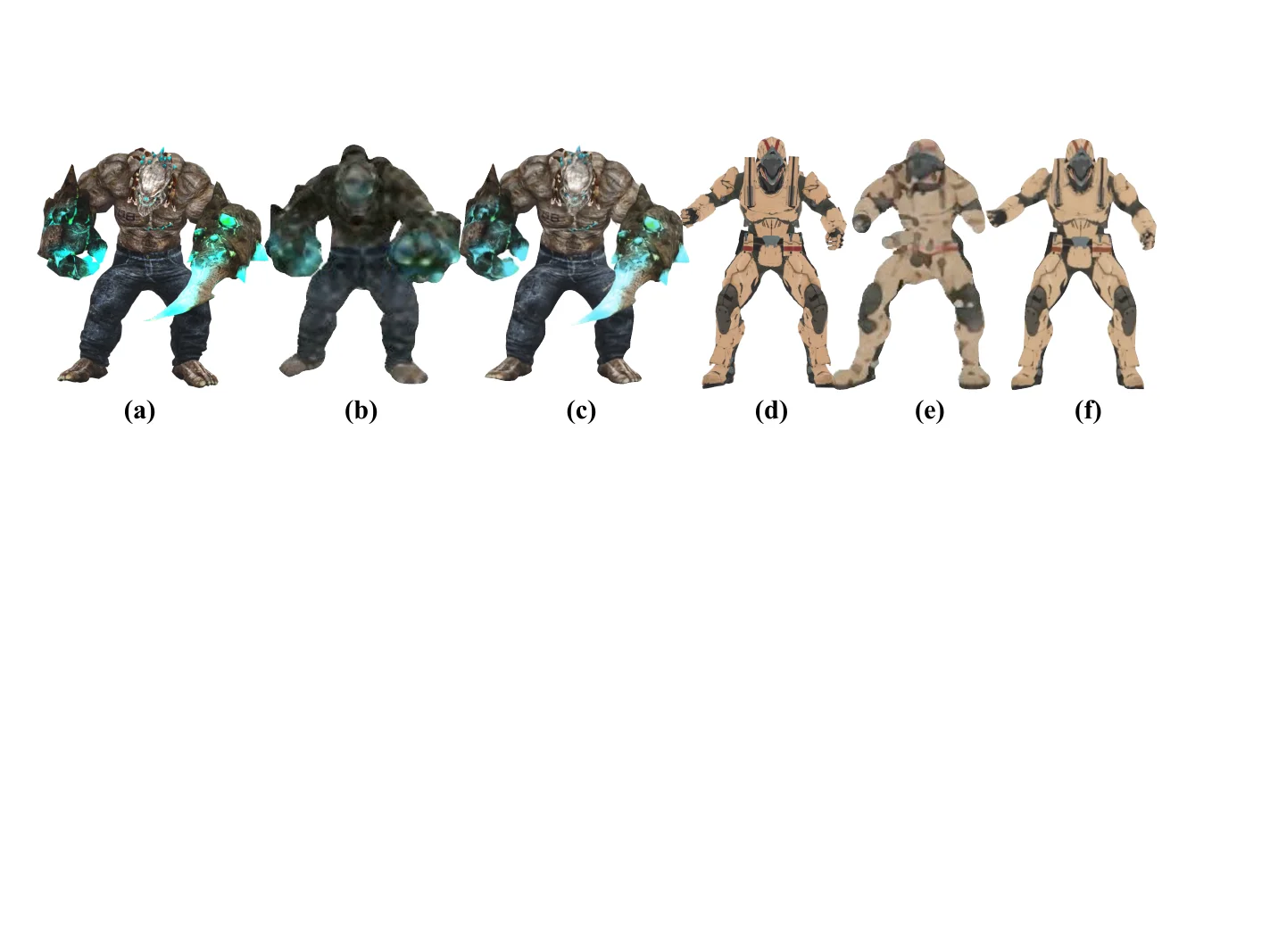
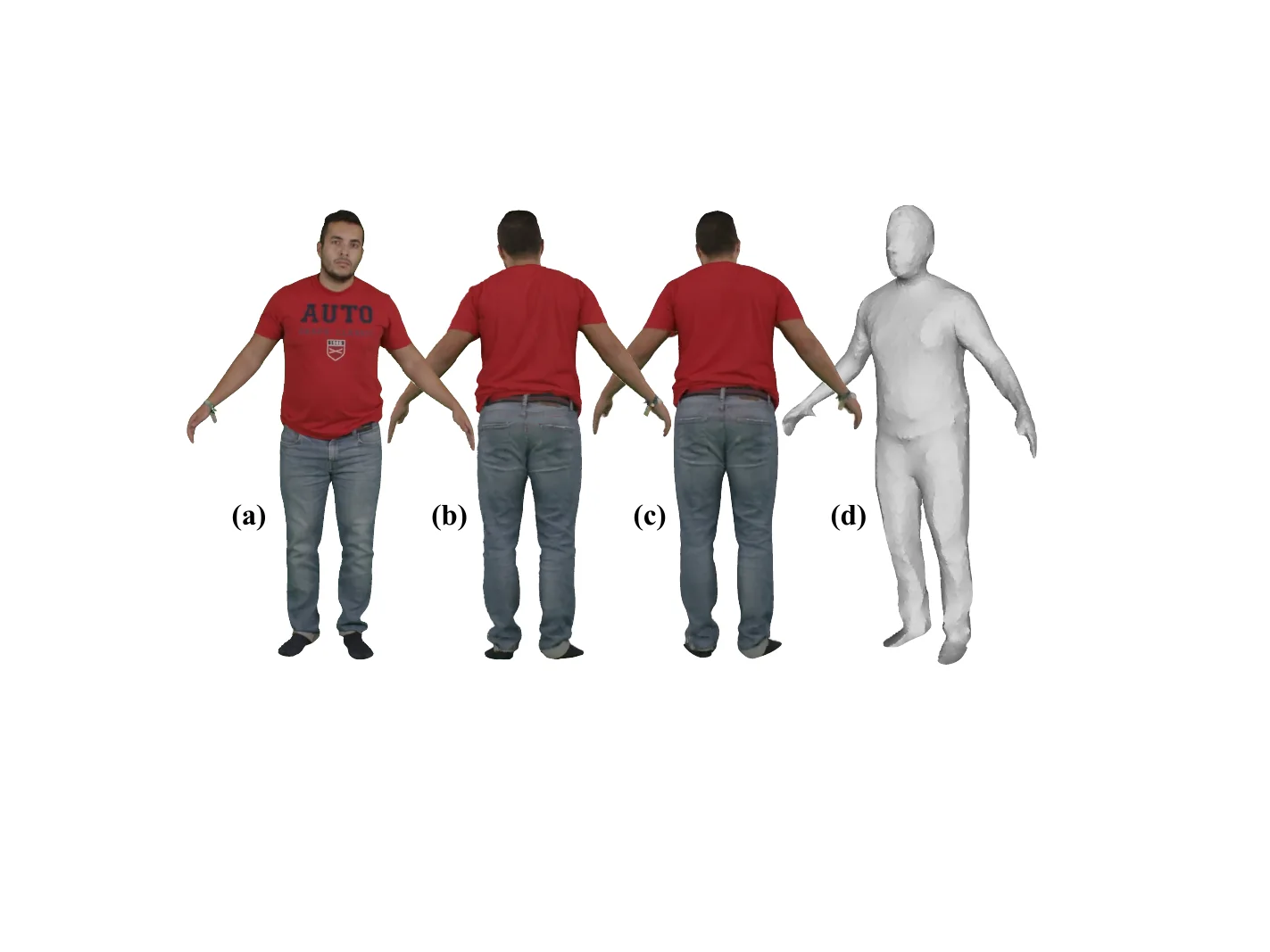
05 / Citation
If you find our work useful for your research,
please consider citing Tessellation GS.
@inproceedings{tao2026tessellation,
  title     = {Tessellation GS: Neural Mesh Gaussians for Robust Monocular Reconstruction of Dynamic Objects},
  author    = {Tao, Shuohan and Zhou, Boyao and Tu, Hanzhang and Wang, Yuwang and Liu, Yebin},
  booktitle = {International Conference on 3D Vision (3DV)},
  year      = {2026}
}